
By Dustin Nelson, Meet Your Vegetables Nutrition Intern
Fat is an important nutrient for the body. It is critical for proper growth and development and maintaining normal health. Fat has a whopping 9 calories per gram which the body uses as stored energy. Fat also acts as an insulator for tissues, a cushion for vital organs and an important part of cell membranes. The skinny? Without fats, our bodies would not function properly and cells would not be able to do their everyday operations.
Nearly all foods contain fats (even carrots have trace amounts of it!). All fats play a role in health and all are really okay to eat, you just needs to consider the amount you eat.
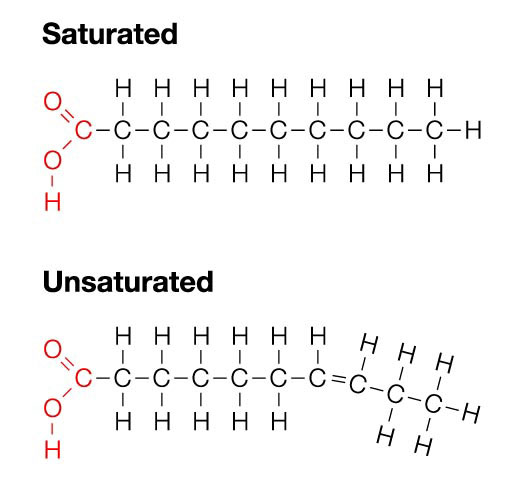
There are three main types of fats that might be seen on a food label: saturated fat, unsaturated fat and trans fat. Each of these fatty acids is a chain of carbon atoms with hydrogen attached. Saturated fats tend to be solid at room temperature (like butter and coconut oil), while unsaturated fats will remain liquid (most oils).
In addition to unsaturated and saturated, there is trans fat. Trans fat is naturally occurring in some meat and dairy products, but in the past century food companies started to produce artificial trans fats. Artificial trans fats, like margarine and shortening, are created when a type of vegetable oil (unsaturated) is artificially saturated with hydrogen atoms. The process is cheap and the products are easy to work with. For majority of the 20th century, these shortenings were considered to be healthier than saturated fats, but research now confirms the shape of these hydrogenated fats are even worse for our health, due to the “trans” configuration. The average American eats about six grams of trans fats a day! Ideally, an adult should consume zero to two grams per day.
The 2015 Dietary Guidelines for Americans state that an adult’s calorie intake should consist of 20-35% of fats. Of this calorie range, no more than 10% should be from saturated fats. Saturated fats are found mainly in meat and whole milk dairy products such as ice cream, milk, and cheese. The remaining fats should be unsaturated fats. Of these unsaturated fats, it’s of upmost importance to incorporate omega-3 and omega-6 polyunsaturated fatty acids. Both of these fats are essential fatty acids that cannot be synthesized by the body and therefore must be incorporated through food.

Click here for our seasonal salmon recipes!
There are numerous omega-3 and omega-6 rich foods at the farmers market! Some great sources are ground flaxseed, eggs, wild-caught salmon, grass-fed meat products, whole grain pasta, whole grain bread and whole grain cereal. Healthy fats like these are critical to the body as they contribute to blood clotting, build cell membranes in the brain, and protect against heart disease. They have also been shown to lower blood pressure and heart rate and improve blood vessel function. High doses have even shown to decrease inflammation and lower triglycerides.